
One of Europe’s leading providers of EMDR training with an international reputation for excellence

Eye Movement Desensitisation and Reprocessing (EMDR) therapy is one of the most significant, exciting and innovative therapeutic developments for decades in the treatment of psychological trauma related conditions, supported by extensive research. It is recommended for the treatment of PTSD in national and international guidelines including the National Institute of Clinical Excellence (NICE), the World Health Organisation (WHO) and the International Society for Traumatic Stress Studies (ISTSS). EMDR is a successful therapy used by counsellors, therapists, psychotherapists, psychologists and psychiatrists.
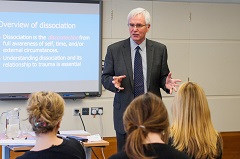
Highly interactive, trainee-centred, innovative, small group EMDR courses. Accredited by EMDR Europe and EMDR UK. EMDR training provides you with the theory and skills that you can put to use immediately. Includes 10 hours of supervision.
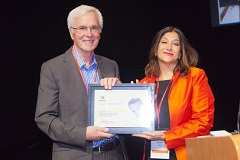
Richard Mitchell, EMDR Works’ Senior Trainer, receiving the prestigious David Schreiber award in recognition of his outstanding achievements in the field of EMDR. The award was presented by the President of the EMDR Europe Association.
EMDR TRAINING
EMDR Works Training and Developmental Pathway
Our training for Eye Movement Desensitisation and Reprocessing (EMDR) is highly interactive with a balance between theoretical and practical work, with live and video demonstrations. In on-going consultation, coaching and development with many hundreds of EMDR Therapists successfully trained by EMDR Works, we have created effective and efficient methods for training EMDR therapists. The standard EMDR training course is divided into four parts, which includes 10 hours of supervision and consultancy. It provides the time, support and supervision necessary to enable trainees to fully integrate this unique and innovative therapy into their existing therapeutic skills.
During training, practical work takes place in small groups (maximum 12) with the assistance of an experienced facilitator or trainer. Trainees will also practice the protocol by working on their own material (i.e. an old memory), both as a client and clinician. We are currently providing EMDR online courses via Zoom at least until the end of August.
Part 1 Training: The eight phase protocol – basic theory and practice (2 days)
- How Eye Movement Desensitisation and
- Reprocessing was developed and the theoretical background
- Adaptive Information
- Processing model (AIP)
- Taking a trauma history, assessing treatment contra-indications
- Case conceptualisation and the ‘Three layered approach’
- Strategies for stabilising patients/clients before embarking on treatment
- Dealing with abreactions during treatment as well as with blocked processing
- A basic understanding of dissociation
- Clinical practice as client and clinician
- Between Part 1 and 2 you will be expected to practice EMDR on at least one client
Part 2 Training: A deeper understanding of the protocol – working with a wider range of clients, unblocking stuck processing, identifying specific treatment problems. (2 days)
The symptom based approach
Blocked processing and the Cognitive Interweave
The Touchstone Memory – finding the root memory/ earliest experience feeding current problems
Coping with affect-tolerance problems
Activating resources to aid processing and build client strengths
Working with children and adolescents
Phobias and current anxieties and using the future template
Role plays and video material
Supervision
Clinical practice as a client and clinician.
On completion you will credited with 2 hours supervision towards accreditation
Part 3 Training: More challenging and complicated problems and interventions (2 days)
- Adaptive Information Processing in practice
- Complex trauma and dissociation
- Sexual and other childhood abuse
- Chronic and blocked grief
- Working with belief systems
- EMDR and depression
- The ‘Flash Forward’ and anticipatory anxiety strategy
- Practising advanced emotional containment and ‘benign dissociation’ strategies
- Clinical practice as a client and clinician
- Supervision
- On completion you will credited with a further 2 hours supervision towards accreditation (total 4 hours)
Part 4 Training: Accreditation, consultation and supervision. (1 day)
(Anyone who has previously completed all three parts of EMDR training may take Part 4 for supervision or as a refresher)
- Applying the theory in your practice
- Examine and analyse your clinical use of EMDR
- Common mistakes
- Refresh your knowledge of the clinical applications of EMDR
- Learn through sharing your experience of using EMDR
- Cultivate an accreditation-oriented approach to the practical application of EMDR
- On completion you will be credited with a further 6 hours supervision towards accreditation (total 10 hours)
Timetable
Parts 1, 2 & 3 – Day 1:
- 8:30am: Registration
- 9:00am: Start
- 5:30pm: End
Parts 1, 2 & 3 – Day 2:
- 8:30am: Registration
- 9:00am: Start
- 5:00pm: End
Part 4 – Day 3:
- 8:30am: Registration
- 9:00am: Start
- 5:00pm: End
Accreditation as an EMDR Europe accredited practitioner:
On completion of all four parts of your EMDR Works training, you will be trained to a level which is recognised throughout the UK and Europe and you will receive the EMDR Europe certificate of completion.
You will have completed 10 hours of group supervision and consultancy from the 20 Hours (minimum) that you need in order to become accredited. You will then be encouraged to complete the final part of your accreditation as an EMDR UK and Ireland Association and EMDR Europe Accredited Practitioner. Accreditation is voluntary, but highly recommended.
EMDR Works Training Schedule
No further standard EMDR training courses are planned for the time being, except for in-house training.
Eligibility To Train
- ALL applicants must have a significant proportion of their current primary role delivering 1:1 psychotherapy.
- ALL applicants must have the full support of their clinical supervisor to attend the training.
- ALL applications must have access to training cases for the duration of the course.
MENTAL HEALTH PROFESSIONALS
Clinical psychologists (HCPC)
Counselling psychologists (HCPC)
Educations psychologists (HCPC)
Forensic psychologists (HCPC)
PSYCHIATRISTS:
MRC Psych or equivalent (including Certificate of Completion of Specialist Training in any psychiatric speciality)
or:
(a) Have completed both long and short psychotherapy cases, and
(b) Have the equivalent of three years full-time psychiatric experience, and
(c) Provide a letter from the line manager confirming the above.
Registered Mental Health Nurses (NMC), Registered Learning Disability Nurses (NMC), Arts Psychotherapists (HCPC),
Occupational Therapists (HCPC) and Registered Social Workers who:
(a) Have mental health training, can recognise and assess common mental health problems and have experience working in a mental health setting, and
(b) Have training and a minimum of two years experience of providing one-to-one psychotherapy, in addition to their professional training, and
(c) Have provided a reference from their clinical supervisor, confirming the above.
COUNSELLORS/ PSYCHOTHERAPISTS
MUST hold full accreditation by one of the following professional bodies:
- BABCP
- BABCP
- UKCP
- British Psychoanalytic Council (BPCP)
- National Counselling & Psychotherapy Society (NCPS) Accredited Professional grade.
- Federation of Drug & Alcohol Practitioners (FDAP) who are NCAC accredited.
- COSCA
- COSRT
CLINICAL PSYCHOLOGY TRAINEES
In their final year of training, with a letter of recommendation from their clinical supervisor, are eligible to begin the Standard EMDR Europe course but cannot fully complete it until their registration with HCPC is confirmed.
NHS England applicants:
Click here to view the HEE Eligibility List.
Click here to view the HEE NHSE EMDR Clinical Governance Guidance document.
In-House Training
The EMDR Works team has extensive experience of delivering in-house training across the NHS, mental health charities and professional teams.
In-house training is an excellent option for teams and organisations that would like several staff members (minimum 10) trained in EMDR.
To discuss your needs and to receive a quotation, contact admin@emdrworks.org
Trainee-Centred Courses
Training designed to meet individual trainees’ requirements
The EMDR Works team will make sure that you gain the skills and understanding necessary to begin using the EMDR model right from the time you complete Part 1. Time will be given to discuss with you how to get started and how to apply the EMDR protocol to your particular work setting.
Interactive groups in a tutorial format
The consolidation of learning in any training course does not just take place during the formal lectures, but most importantly, in the small discussion and practice groups. At EMDR Works, we give special time and attention to making sure that you integrate the information given to you into your practice.
Emphasis on building strong group cohesion
Your group facilitator is highly trained in building the best possible environment for effective learning. EMDR Works course members are usually drawn from a range of professional groups. This gives you ample opportunity to work with those from your own profession whilst also providing a rich opportunity to hear and understand different approaches to working with trauma from other mental health professionals.
Training within a supportive and safe learning environment
Through discussion and experience, your trainer and facilitator will help you to understand that trauma unites all psychotherapy. There is a common experience and language of trauma which is international. This will help you to appreciate that there is a level at which we are all united, no matter what our professional background, race, religion or gender, and that we are working together towards a common goal.
High staff to trainee ratio
The EMDR Works team is highly trained and experienced to give you the best opportunity to learn. There will always be enough staff to make sure that you receive the attention that you require in order to maximise your learning, both in small groups and individually. The staff to trainee ratio is never greater than 1 to 12 and is often less.
Practical learning and discussion
EMDR Works training is highly interactive with a balance between theory, practical work, demonstrations and video material. Practical work takes place in small groups with the assistance of an experienced facilitator or trainer. You will have the opportunity to practice the protocol by working on your own material, both as a client and a clinician.
ABOUT US
The EMDR Works Team

Richard Mitchell
- Richard Mitchell is an EMDR Europe accredited Senior Trainer
- He is the founding president of the EMDR Europe Association and has contributed significantly to the development and implementation of the highest standards in the theory and practice of EMDR throughout Europe.
- He was trained in EMDR by Francine Shapiro in 1993/4 and is one of the most respected and experienced EMDR trainers in Europe.
- He rigorously applies the highest standards to his training.
- He has an international reputation as a skilled senior trainer who has trained throughout the world as part of the EMDR Humanitarian assistance programme following national disasters, war and civil conflict.
- He has played a pivotal role in making the EMDR Europe Association the largest and most influential trauma related organisation in Europe. EMDR Europe now has over 7000 members.
- He is chair of the EMDR Europe Standards Committee and is responsible for the monitoring and accreditation of EMDR Europe trainers and training courses.
- Richard is a trustee of the EMDR UK & Ireland Association Council and is actively involved in the development of EMDR in the UK & Ireland
- Richard is director of EMDR Works
- His background is in mental health social work and psychodynamic and humanistic psychotherapy.
- Richard is totally committed to the development of EMDR theory and practice in line with the most recent research and theoretical developments.
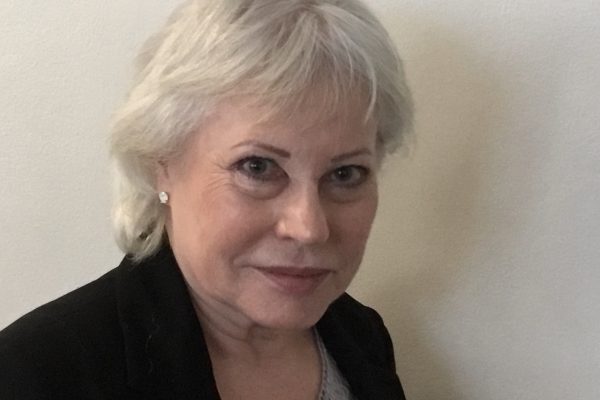
Therese McGoldrick
- Therese’s background is in mental health nursing and cognitive behavioural psychotherapy (CBT).
- She is an accredited and experienced EMDR Practitioner, consultant and facilitator.
- Therese has trained throughout the world as part of the EMDR Humanitarian Assistance Programme following national disasters, war and civil conflict.
- She is head of services for an NHS Trusts Behavioural Psychotherapy Service.
- Therese is also an Honorary Senior Research Fellow at Stirling University.
- She has an esteemed reputation as a researcher and has published widely.
- Therese has been presented with EMDRIA’s award for Outstanding Research in EMDR.

Marian Tobin
- Marian Tobin is an EMDR Europe-accredited consultant, training facilitator and clinical supervisor.
- She has thirty years experience working in the field of adult mental health services in management and as clinical lead, predominately within the context of crisis and community mental health teams, where she has been instrumental in the development and delivery of specialist crisis, trauma and PTSD services.
- She has clinical expertise in the treatment of complex trauma with adult survivors of childhood sexual, emotional and physical abuse. She is also highly skilled in the treatment of trauma and PTSD using EMDR with refugees, asylum seekers who have been held hostage and experienced torture and abuse.
- Marian is contracted to provide EMDR therapy to traumatised service personnel of national & international public and voluntary organisations who have experienced and/or witnessed extreme human cruelty or tragedy in the course of their working lives.
- Trained in Critical Incident response Marian is a former member of the pan London psychosocial emergency planning group formed in response to the terrorist attacks in London in 2005. She has continued to be actively involved in the provision of psychological treatment to victims of subsequent terrorist incidents in the capital and to those suffering PTSD associated with national atrocities.
- Marian is a trustee and board member of the national EMDR UK & Ireland Association; she is chair of the conference committee and a member of the accreditation committee.
- Her professional background is in mental health social work and she is registered with the Health Care Professions Council.
- Marian is based in central London where she has a private practice.
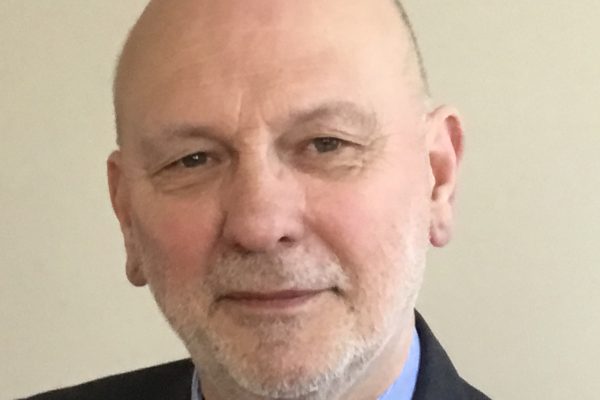
Keith Piper
- Keith Piper was an independent Consultant Clinical Psychologist with over 35 years experience.
- He was a Chartered Psychologist and registered with the Health Professions Council. He was a member of the BPS Division of Clinical Psychology.
- He was Head of a Department of a Clinical Health Psychology in the National Health Service in the UK until 2015.
- He was trained by Francine Shapiro in 1994 and 1995.
- He became an EMDR Facilitator and Accredited EMDR Consultant in 2000.
- He has held offices in the EMDR UK Association and Ireland as a Board member and Trustee. He served as Secretary from 2004-2007 and then as President of the Association from 2007-2008.
- He has been a UK representative to EMDR Europe and has been elected as the Secretary of EMDR Europe and a member of the EMDR Europe Executive.
- He contributed widely to the development of policy and governance in both the UK and Europe.
- He had a private practice involving clinical work, medico-legal work, clinical supervision and training in EMDR.

The EMDR Works Administrators: Judy Mitchell and Sharon Williamson
Judy is EMDR Works’ Training Administrator. She deals with initial enquiries, applications and administration during training.
Sharon is EMDR Works’ Finance Administrator. She answers finance and payment queries, processes invoices and payment and is responsible for book-keeping. She also liaises with venues to ensure that training runs smoothly.
Both Judy and Sharon can be contacted on admin@emdrworks.org.
Training with Richard Mitchell
Richard Mitchell is an EMDR Europe accredited Senior Trainer and one of the most respected and experienced EMDR trainers in Europe.
- He was trained by Francine Shapiro (EMDR Founder) in 1993/4.
- He is the founding president of the EMDR Europe Association and played a pivotal role in building that organisation from four countries with a few hundred members to its present 44 countries with over 50,000 members, making it the largest and most influential trauma organisation in Europe.
- Richard is the former chair and long-standing member of the EMDR Europe Standards Committee. This Committee is responsible for accrediting EMDR Europe trainers and training courses and for upholding and advancing standards in training and practice.
- He has made significant contributions to the development, implementation and maintenance of the highest standards in the theory and practice of EMDR throughout Europe, and rigorously applies those standards to his own training.
- Richard is fully committed to the development of EMDR theory and practice in line with the most recent research and theoretical developments.
- Richard is a founding member of the EMDR UK Association and a former trustee of the Association. He remains actively involved in developing EMDR in the UK.
- He has developed an international reputation for his work worldwide as part of the EMDR Humanitarian Assistance programme, where he helped establish EMDR treatment services following natural disasters, war and civil conflict.
Links
EMDR Europe
Establishes, maintains and promotes the highest standards of excellence and integrity in EMDR practice, research and education throughout Europe. The professional organisation which accredits EMDR Trainers and the approved EMDR training course.
www.emdr-europe.org
EMDR UK Association
The essential resource for all UK-specific EMDR information on practice, teaching, and training. The professional organisation which accredits EMDR Practitioners and Consultants in collaboration with EMDR Europe.
www.emdrassociation.org.uk
The Francine Shapiro Library
The Francine Shapiro Library is the primary source of academic articles, research, and other key literature on Adaptive Information Processing and EMDR.
https://francineshapirolibrary.omeka.net/
David Baldwin’s Trauma Information Pages
One of the best trauma-related websites available. This site maintains a focus on EMDR which reflects Dr Baldwin’s interest and training.
www.trauma-pages.com
Testimonials
“I would like to thank the entire team at EMDR Works for delivering such high standard training throughout the four stages. I feel it has equipped me and has given me the confidence to practice as an EMDR practitioner, and it has inspired me to continue my learning”.
Tom
“Very professional, enjoyable, challenging and well-organised, and a huge wealth of information and ideas from highly experienced practitioners. Can’t wait to put this into practice with more clients! Great service from a fair quote to booking date confirmation, everything on time. Finished to a high standard.”
Steve
“It was such a pleasure to work alongside such wonderfully passionate, knowledgeable and skilled trainers. I feel that I have had the best training I could have had for EMDR, and even with having to move online whilst getting used to using it, the mixture of the trainers’ approach, the succinct materials and memorable presentations has allowed me to feel confident!
Chris
“I would like to express true appreciation to Richard and the whole team for sharing your vast experience, skill and passion for this fantastic way of supporting clients’ healing. I am really pleased to have done the training, which I recognise is just the first step forward to the next steps in incorporating EMDR within my practice”.
Liz
“Excellent. Clearly, a lot of thought had gone into how best to structure this, to solidify the group’s learning. I really enjoyed thinking as a group about different issues presented within an EMDR framework. It’s been a really thoughtful, informative training block that I’ve loved. Thank you.”
Lara
Louise
Carolin
“Just a thank you to the whole team, I’ve really enjoyed and valued the opportunity to be on this course. I believe the teaching has been excellent. It’s been lovely being taught by clinicians who are clearly very passionate about their work.”
Liz
“I have been impressed by the staff’s knowledge and encouragement. It is clear that staff champion EMDR as an intervention, and this is evident throughout all seven days of training. Having been sceptical about the “buzz” around EMDR, consider me convinced. I will be incorporating EMDR into my wider clinical work. Thank you for everything.”
Darren
“This training was the most enjoyable I have experienced in years – 25 to be precise. The information and material covered were presented in a clear and understandable manner. The days were scheduled in a way that I still had energy left at the end and was eager to return for more the next day. Richard and his team successfully built my confidence in applying what I learned. I have now worked with over 100 patients and achieved some remarkable results.”
Gary
“I have thoroughly enjoyed every part of the training and felt very welcome, motivated, and encouraged by all the trainers. I would like to thank Richard, Marion, Therese, and Keith for their support, and of course, Judy (admin), as it would not have been possible without her.”
Clare
RESOURCES
Downloads from EMDR Works training
Latest research on EMDR
CONTACT US
Please contact us by email if you have any questions about our training.